In Praise of an Ordinary Notebook
The notebook I use most is the one I am least afraid to spoil.
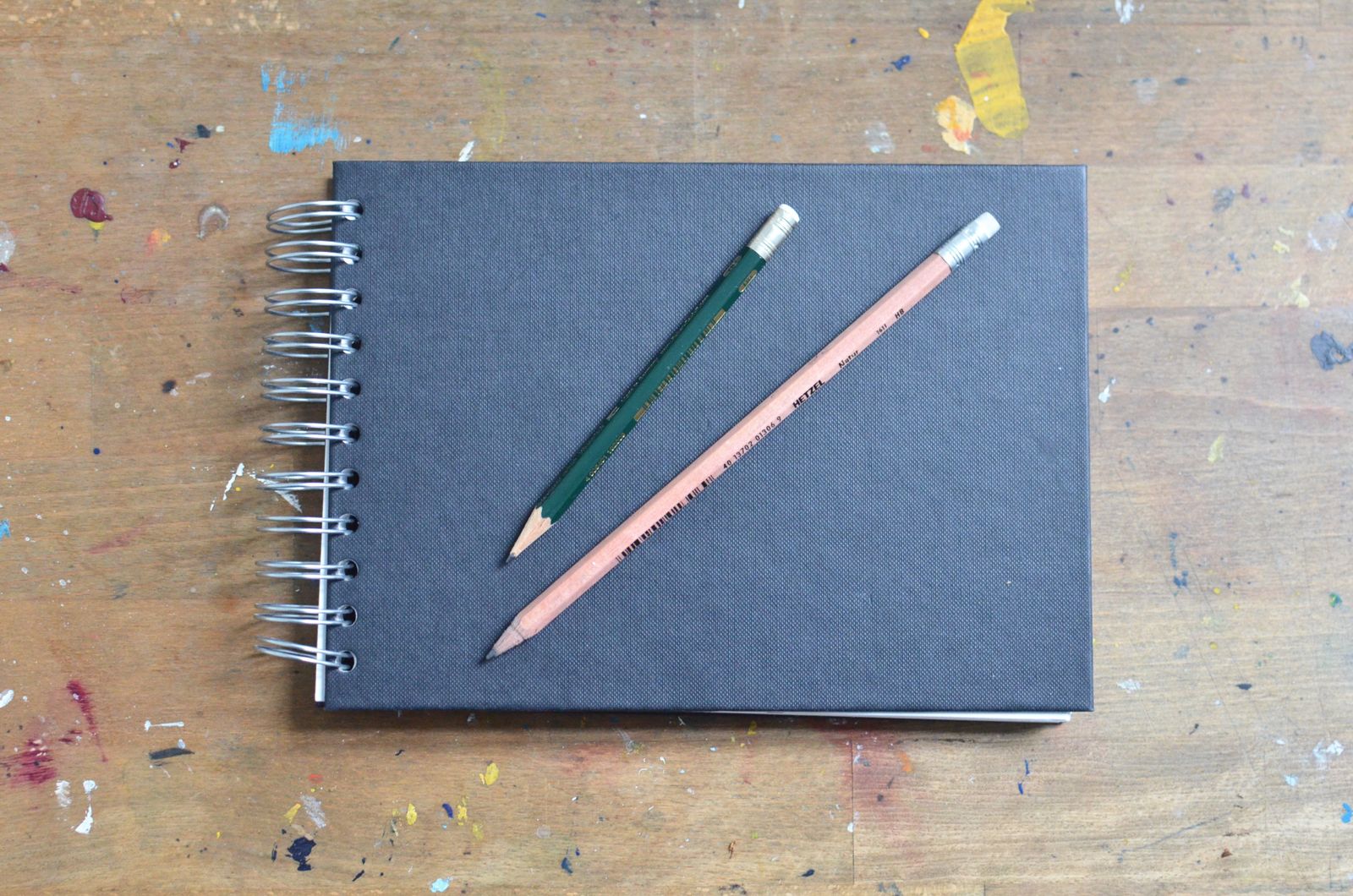
Beautiful notebooks create terrible pressure. Thick paper, stitched binding, and an elegant cover suggest that the first page deserves a sentence equal to the object. I hesitate, search for a worthy subject, and place the notebook somewhere safe. Safety becomes a form of permanent storage.
An ordinary notebook is easier to begin.
The one on my desk has no special paper and no system beyond a line drawn across the page when the subject changes. Film titles sit beside grocery lists. A useful quotation may share a page with the dimensions of a shelf. Nothing is organized enough to become precious.
That disorder is functional. Writing by hand slows a thought just enough to expose its shape. It also allows marks that would feel clumsy in a document: arrows, boxes, abandoned diagrams, a word written larger because it seems to contain the problem.
I have tried dividing notebooks by subject. The result is always several nearly empty books, none available when the relevant thought appears. A single mixed notebook accepts that interests overlap. A note about production design may turn into a question about architecture. A recipe adjustment may become an observation about habit.
The best feature is disposability. If a page goes wrong, I turn it. If the cover bends, the notebook becomes easier to carry. Wear improves the object because it lowers the standard for the next entry.
Tools can encourage work by becoming invisible. My ordinary notebook does not ask to be admired. It asks only to remain within reach.